
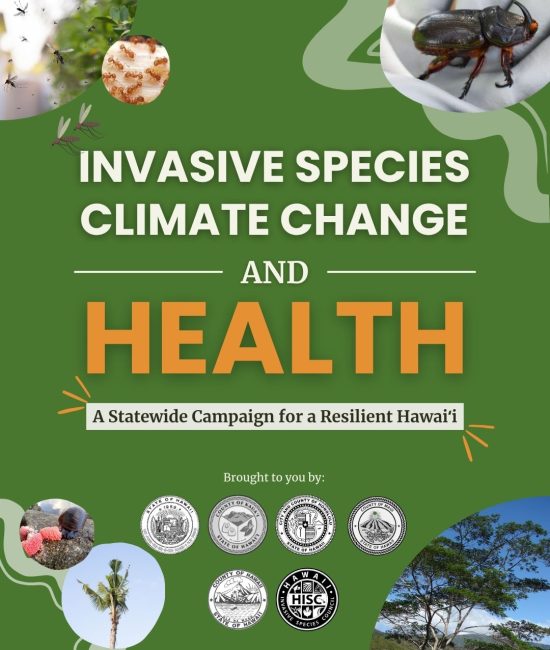
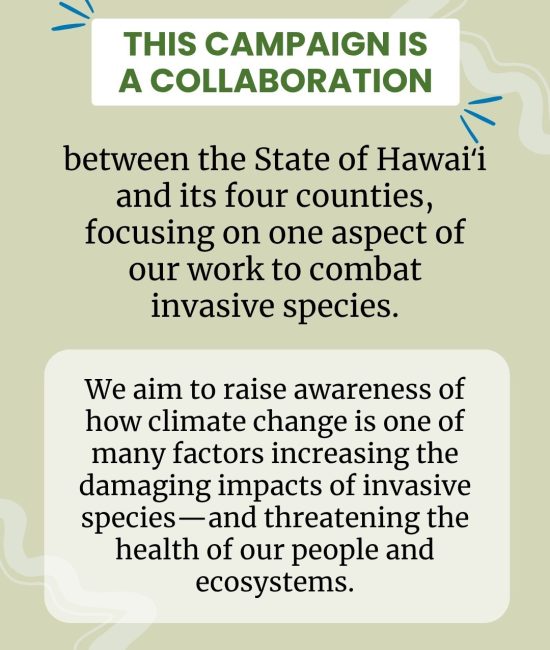
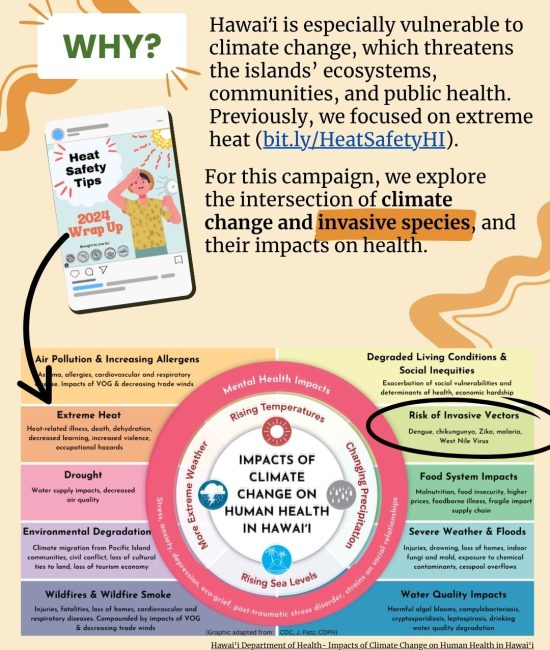
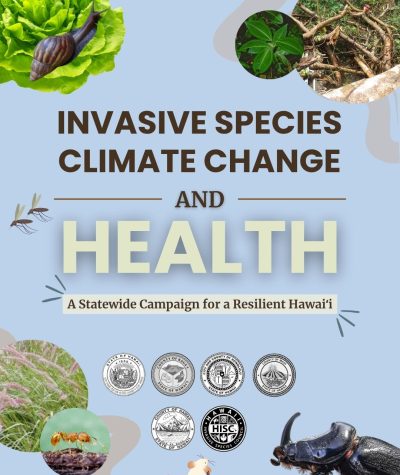
Climate change is making Hawaiʻi more vulnerable to invasive species — and that puts our health, native ecosystems, and future at risk. Follow along as we launch a statewide campaign that will run through the summer to raise awareness.
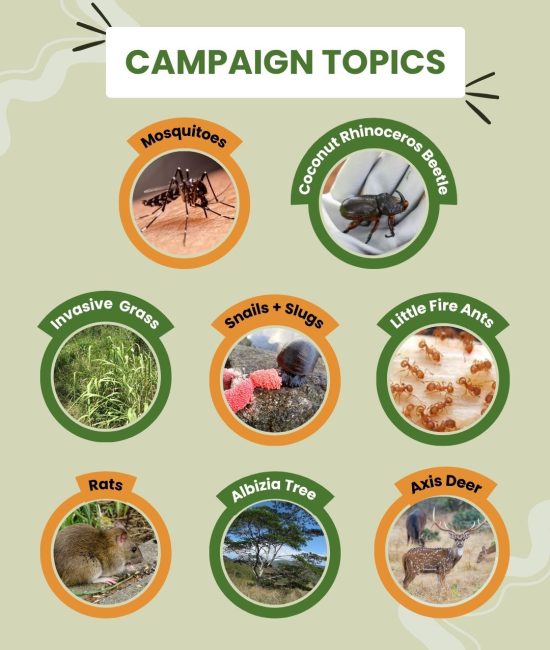
From mosquitoes and little fire ants to invasive grasses, slugs/snails, and the coconut rhinoceros beetle — we’re diving into an array of topics on how climate change fuels their spread and what we can do to protect our ʻāina, health, and communities.
#invasivespecies #ClimateAndCrittersHI #InvasiveImpactHI
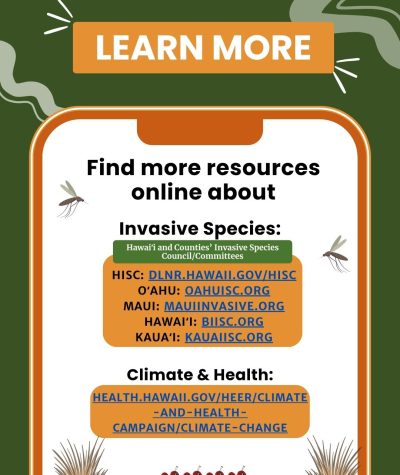
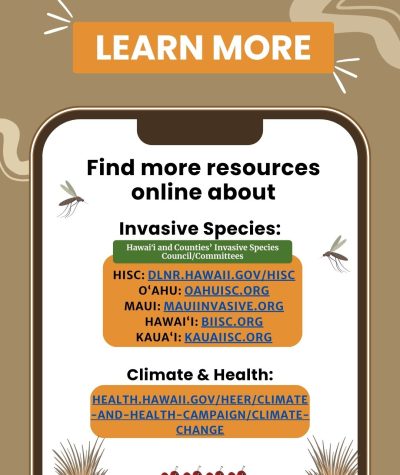
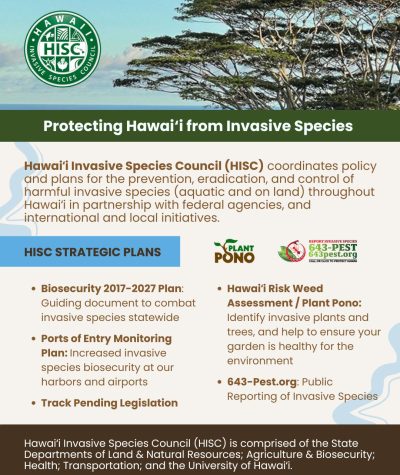
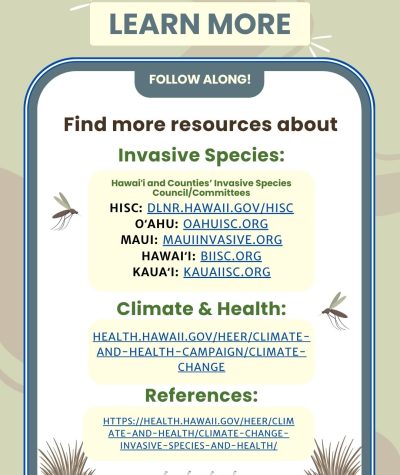
To learn more about the state and counties’ work on invasive species, visit:
Check out some of the topics we have covered
Coconut Rhinoceros Beetle, Climate Change, and Health
Learn more about how climate change is contributing to increased coconut rhinoceros beetle activity and impacts to public health.
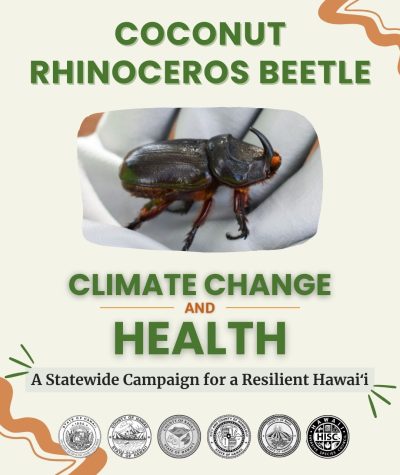
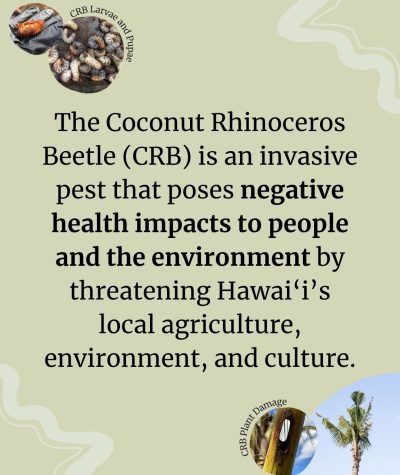
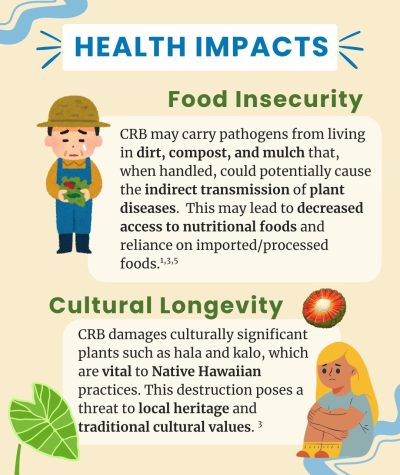
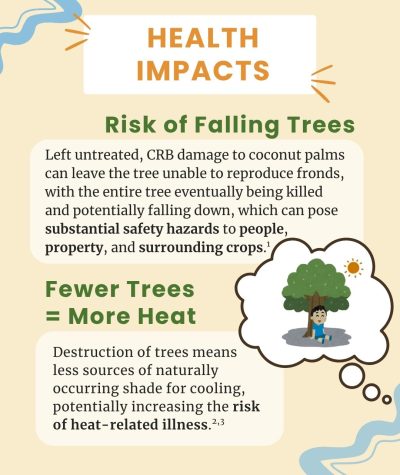
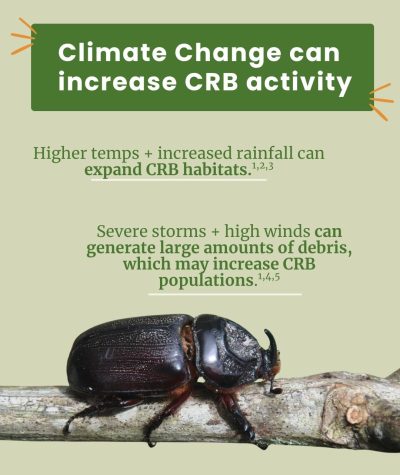
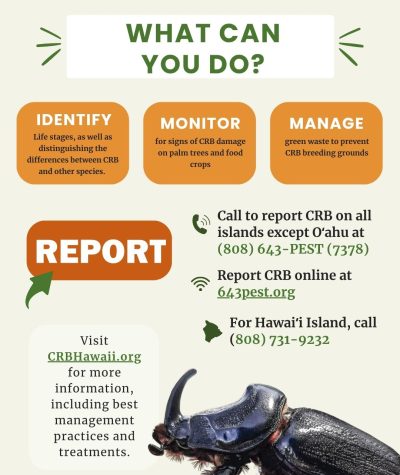
Native to Southeast Asia, the Coconut Rhinoceros Beetle (Oryctes rhinoceros) is an invasive species that was first detected on O’ahu in 2013 and has since been reported on Kaua’i, Hawai’i Island, and Maui starting in 2023 (1). The beetle is destructive to a large number of agriculturally and culturally important plants – coconut palms, fan palms (endemic to Hawai’i), hala, banana, kalo, and more (2).
Learn more about CRB and other invasive species by following along on the Climate Change, Invasive Species, and Public Health social media campaign with any of the tagged collaborators through the remainder of the summer! #CRB #invasivespecies #ClimateAndCrittersHI #InvasiveImpactHI
References:
(1) Hawaii Department of Agriculture. Coconut Rhinoceros Beetle Response. https://www.crbhawaii.org/current-status. Accessed 9 June 2025.
(2) Hawaii Department of Agriculture. Coconut Rhinoceros Beetle Response. https://www.crbhawaii.org/biology-and-host-material. Accessed 9 June 2025.
- Climate Change Connections: Guam (Coconut Palms) (2025)
- DLNR: Coconut Rhinoceros Beetle
- Coconut Rhinoceros Beetle (2023)
- CRB Frequently Asked Questions
- Determining the potential distribution of Oryctes monoceros and Oryctes rhinoceros by combining machine-learning with high-dimensional multidisciplinary environmental variables (2019)
- Global potential distribution of Oryctes rhinoceros, as predicted by Boosted Regression Tree model (2022)
- Microbial characterization during composting of municipal solid waste (2001)
- New Interim Rule Continues Restrictions on the Movement of Palm Plants and Organic Material That May Contain Coconut Rhinoceros Beetles
- A Tiny Island and a Giant Beetle: A Fight to Save Coconut Palms in Vanuatu (2024)
- Tree Shade, Temperature, and Human Health: Evidence from Invasive Species-induced Deforestation (2019)
Click here to check out this Instagram post!
Mosquitoes, Climate Change, and Health
Learn how climate change is driving mosquito population growth, and what that means for disease risk and public health.
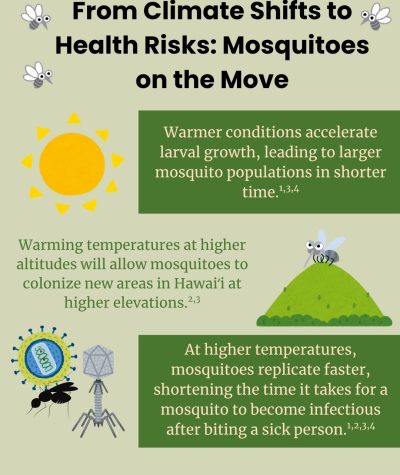
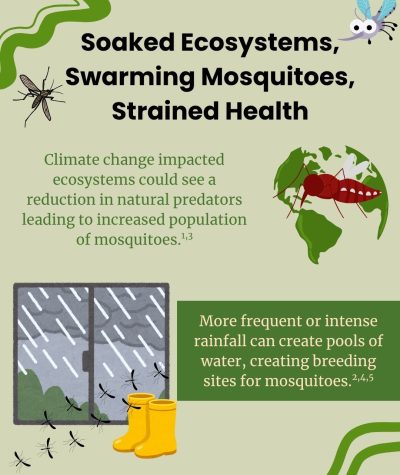
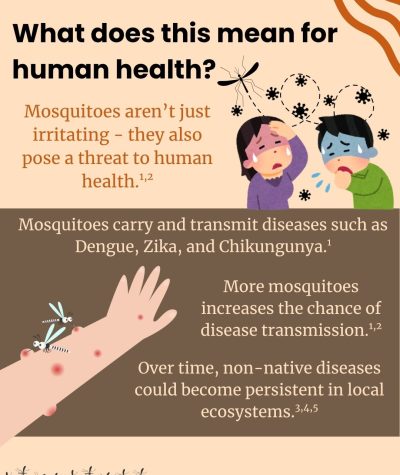
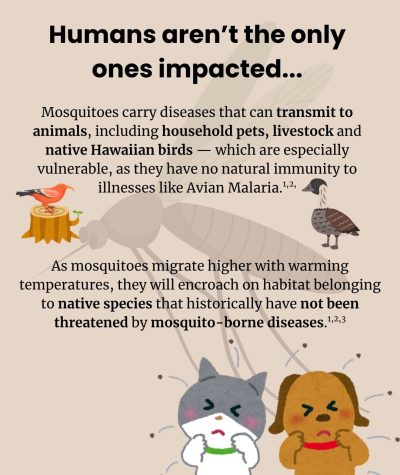
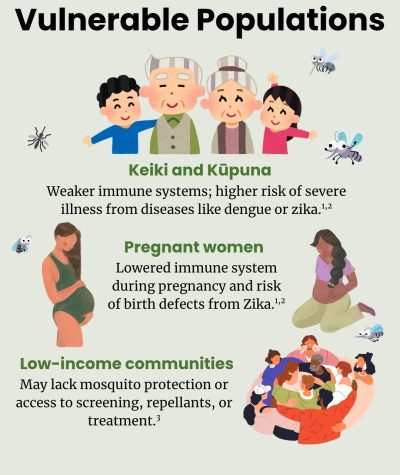
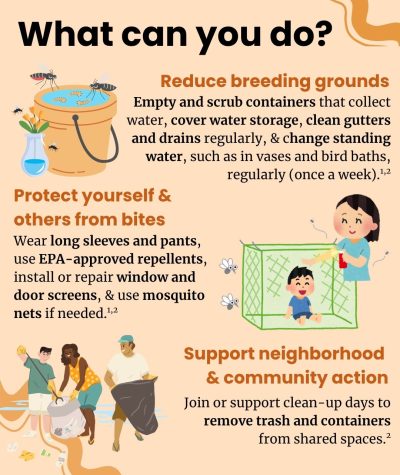
Mosquitoes, observed in Hawaiʻi since the 1800s, have become a prominent species across the islands. Mosquitoes play a significant role as vectors for diseases such as Dengue fever, Yellow fever, West Nile virus, and more (1). As the climate continues to change, vector-borne diseases—such as those spread by mosquitoes—may drive adaptations in both vectors and pathogens. These adaptations can include changes in host immunity, pathogen evolution, and vector-host interactions, potentially leading to shifts or expansions into geographic areas previously unaffected by mosquitoes (2).
Learn more about mosquitoes and other invasive species by following along on the Invasive Species, Climate Change, and Public Health social media campaign with any of the tagged collaborators through the remainder of the summer! #mosquitos #invasivespecies #ClimateAndCrittersHI #InvasiveImpactHI
References:
(1) Hawai‘i Conservation Alliance. Mosquitos and Disease in Hawai‘i. https://www.hawaiiconservation.org/wp-content/uploads/mosquitos.pdf. Accessed 9 June 2025.
(2) Centers for Disease Control and Prevention (CDC). “Vectors.” Climate Effects on Health, https://www.cdc.gov/climate-health/php/effects/vectors.html. Accessed 9 June 2025.
- About Mosquitoes in the United States (2024)
- Climate Change Indicators: West Nile Virus (2025)
- Climate and Vector borne Diseases (2008)
- Ecology of invasive mosquitoes: Effects on resident species and human health (2005)
- Emerging vector-borne diseases in the United States: What is next, and are we prepared? (2016)
- Evaluating the risk of mosquito-borne diseases in non-endemic regions: A dynamic modeling approach (2024)
- Evolutionary adaptation under climate change: Aedes sp. demonstrates potential to adapt to warming (2025)
- Evolution determines how global warming and pesticide exposure will shape predator–prey interactions with vector mosquitoes (2016)
- Explainer: How climate change is amplifying mosquito-borne diseases (2022)
- How will mosquitoes adapt to climate warming? (2021)
- The impact of climate change on travel-related vector-borne diseases: A case study on dengue virus transmission (2025)
- Modeling the impacts of global warming on predation and biotic resistance: mosquitoes, damselflies and avian malaria in Hawaii (2012)
- Mosquito-Borne Diseases in Workers (2024)
- Mosquito-Transmitted Diseases
- Preventing Mosquito Bites (2024)
- The role of native and introduced birds in transmission of avian malaria in Hawaiʻi (2020)
- Vulnerable Populations (2022)
- Urban mosquito distributions are modulated by socioeconomic status and environmental traits in the USA (2023)
- What to Do After a Hurricane or Flood (2024)
Click here to check out this Instagram post!
Albizia & Miconia, Climate Change, and Health
Learn how Albizia and Miconia impact climate change and what that means for invasive species control and public health.
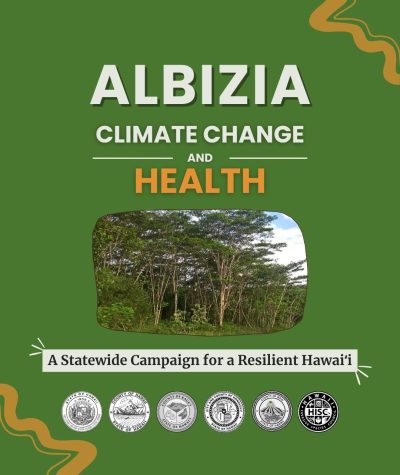
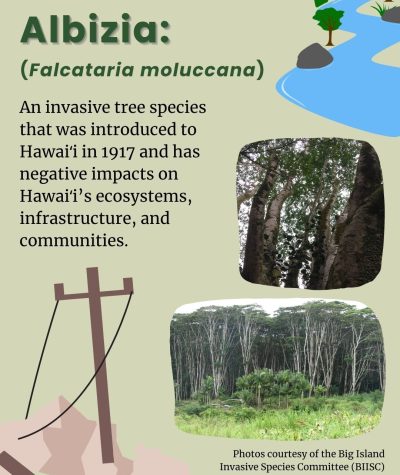
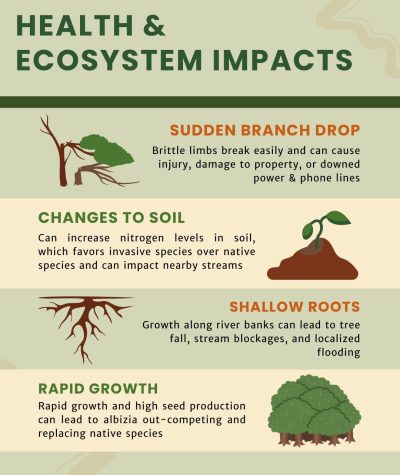
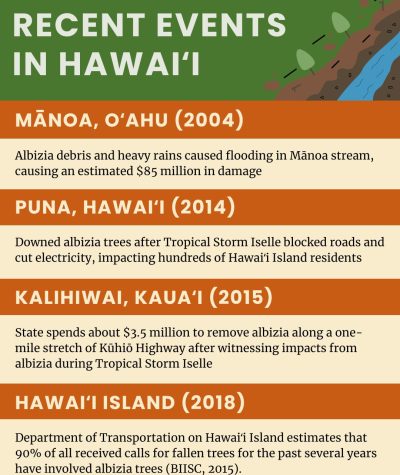
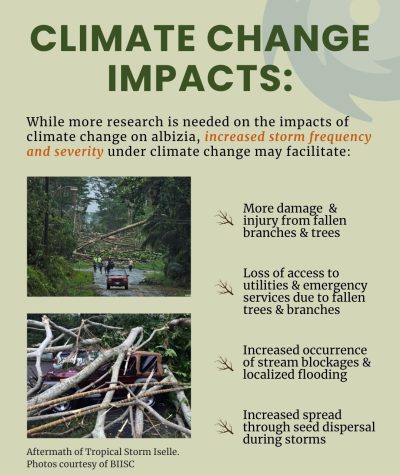
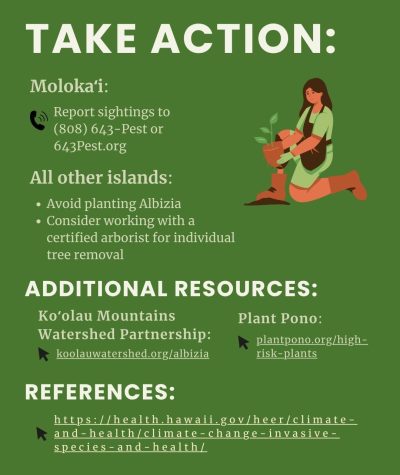
Introduced to Hawaiʻi in the early 1900’s, albizia (falcataria moluccana) is an invasive tree that has negative impacts on Hawaiʻi’s native species, ecosystems, and communities (1). Albizia is a highly competitive species in local ecosystems due to its ability to alter the nutrient composition of soils, maintain a rapid growth rate, and disperse a high volume of seeds that can form persistent seed banks. The brittle branches and shallow roots of albizia can lead to branch drop and tree fall that can damage infrastructure, injure individuals, sever access to emergency services, or cause stream blockages that can lead to localized flooding. Climate change may amplify these impacts through increased storm frequency (2).
Learn more about albizia and other invasive species by following along on the Climate Change, Invasive Species, and Public Health social media campaign with any of the tagged collaborators through the remainder of the summer! #albizia #ClimateAndCrittersHI #InvasiveImpactHI
References:
1) Strategic Plan for the Control and Management of Albizia in Hawaii, Hawaii Invasive Species Council, 2018, dlnr.hawaii.gov/hisc/info/invasive-species-profiles/albizia/.
2) Hughes, R. Flint, et al. “Biology and Impacts of Pacific Islands Invasive Species: Falcataria falcata (Miquel) Barneby and Grimes (Fabaceae).” Pacific Science 78.1 (2024)
- Health and Ecosystem Impacts of Albizia
- Recent Cases in Hawai’i Strategic Plan for the Control and Management of Albizia in Hawaii, Hawaii Invasive Species Council, 2018, dlnr.hawaii.gov/hisc/info/invasive-species-profiles/albizia/.
- Interconnection between climate change and Albizia
Click here to to check out this Instagram post!
Snails and Slugs, Climate Change, and Health
Learn how snails and slugs impact climate change and what that means for invasive species control and public health.
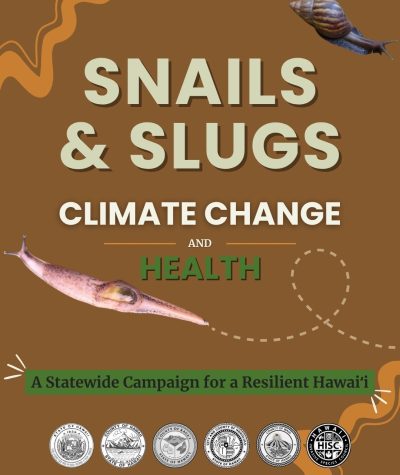
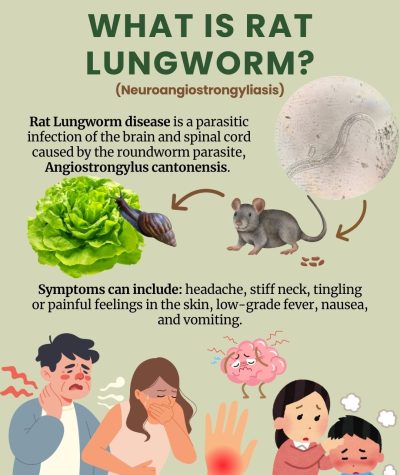
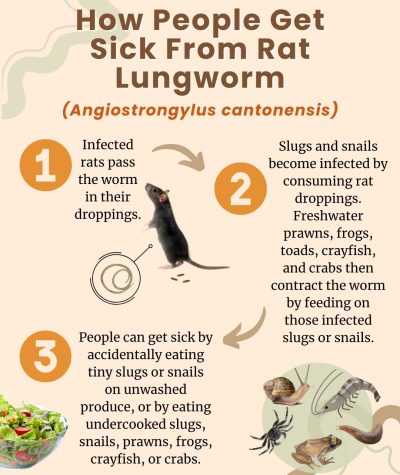
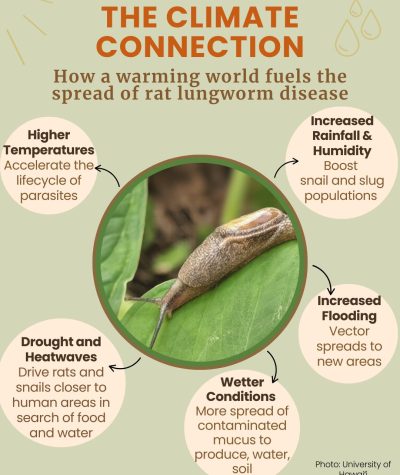
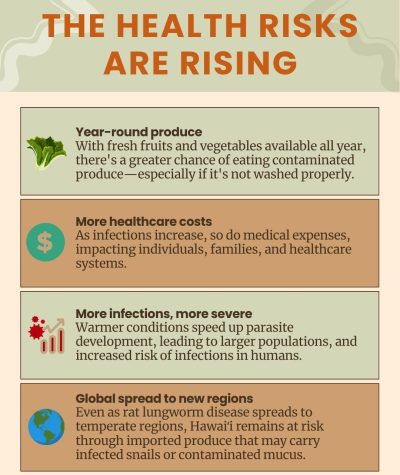
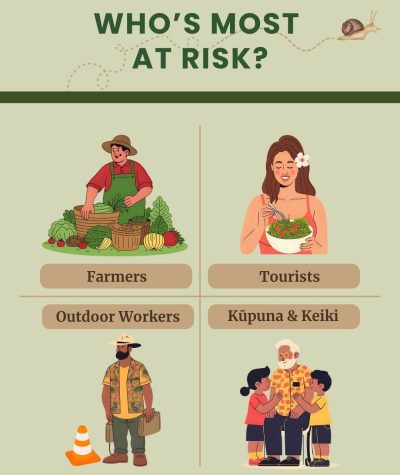
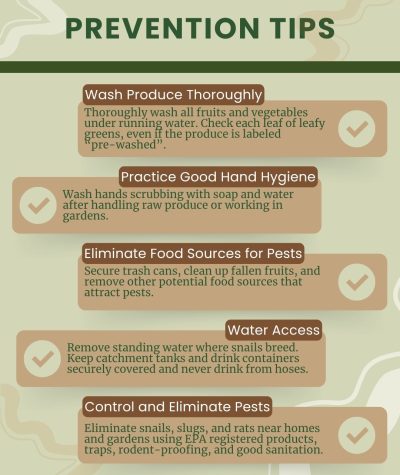
Did you know that changing weather patterns can impact the spread of Rat Lungworm disease?🌧️🌡️🐌 A warming world fuels the spread of invasive species and the diseases they carry. From accelerated parasite lifecycles due to heat, to increased slug populations from humidity, there are many factors that can increase the spread of RLW.
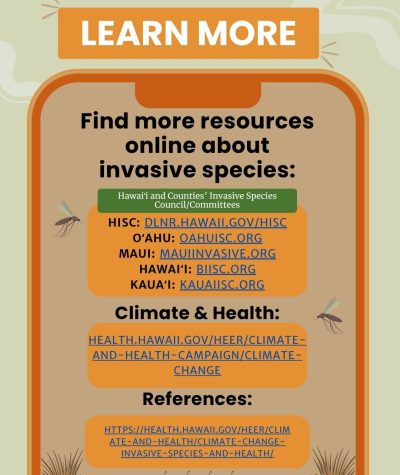
Swipe through to see the lifecycles of Angiostrongylus cantonesis and learn how to protect your household. Top Tip: Always wash your produce thoroughly (even “pre-washed” greens) and check every leaf! You can find more resources at https://health.hawaii.gov/heer/climate-and-health.
- Disease Outbreak Control Division Neuroangiostrongyliasis (2025)
- Disease Outbreak Control Division Transmission of Angiostrongylus cantonensis (2025)
- Climate connection: Increased rainfall leads to increase in snails and slugs population, range expansion and contamination (2018)
- Increase temperature accelerates lifecycle of parasites
- Centers for Disease Control and Prevention Rat lungworm Health effects
- Ratlungworm Prevention
Click here to check out this Instagram post!
Rats, Climate Change, and Health
Learn how rats impact climate change and what that means for invasive species control and public health.
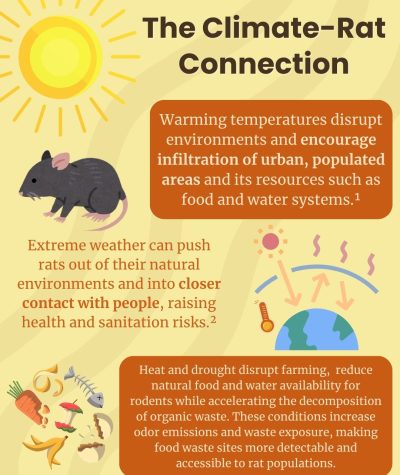
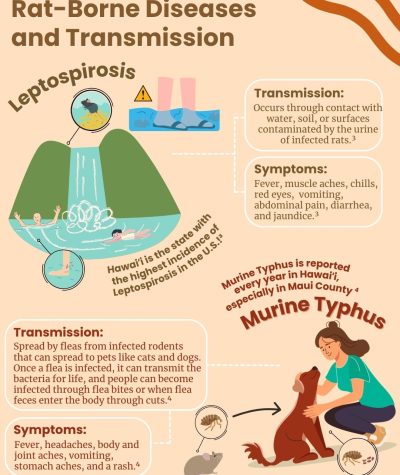
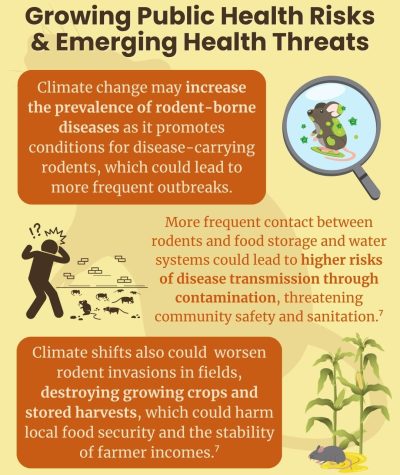
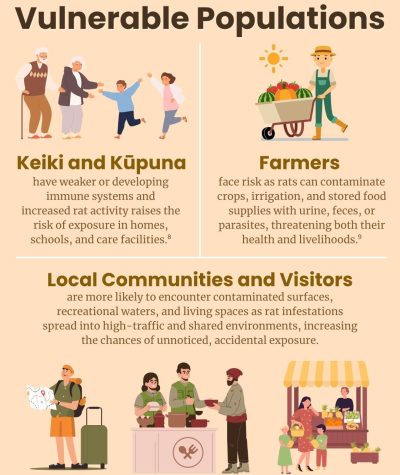
Polynesian rats first arrived with early voyagers nearly 900 years ago, while roof rats, Norway rats, and house mice came after Western contact in the late 1700s. Rats (Rattus spp.) are among Hawaiʻi’s most destructive invasive species, contributing to the decline and extinction of many native plants and animals by preying on bird eggs and hatchlings. Rats are consistently reshaping ecosystems and threatening cultural and ecological resources across the islands (1). Beyond these impacts, they pose serious risks to public health as carriers of disease such as leptospirosis, murine typhus, salmonellosis, and rat lungworm disease (2). Climate change may further amplify these threats by extending breeding seasons and supporting population growth and infestations that spread across urban, agricultural, and natural areas, increasing chances of contamination and transmission of rat-borne diseases (3).
Learn more about rats and other invasive species by following along on the Climate Change, Invasive Species, and Public Health social media campaign with any of the tagged collaborators through the remainder of the summer! #albizia #ClimateAndCrittersHI #InvasiveImpactHI
References:
1) Hawaiʻi Department of Land and Natural Resources. Impacts of Rodents & Mongooses. https://dlnr.hawaii.gov/removerats/home/impacts-of-rodents-mongooses/. Accessed 9 June 2025.
2) Hawaiʻi Department of Health. Rodents. https://health.hawaii.gov/vcb/rodents/. Accessed 9 June 2025.
3) Shiels, Aaron B., et al. “Hurricanes and invasive rats reshape small mammal communities on tropical islands.” Science Advances (2025).
- Extreme weather disrupts rat habitats
- Warming temperatures increase rat populations and increase range of habitation
- Rodents and Rodent Control in Hawai’i (2018)
- Centers for Disease Control and Prevention Human Health Risks
- Disease Outbreak Control Division Murine Typhus (2024)
- Disease Outbreak Control Division Salmonellosis (2024)
- Public health risk
- Prevention
- Disease Outbreak Control Division Prevention (2024)
- Successful Management of Invasive Rats Across a fragmented landscape (2021)
- Department of Health Vector Control Branch
- Center of Disease Outbreak Control Division Rodent Prevention
Click here to check out this Instagram post!
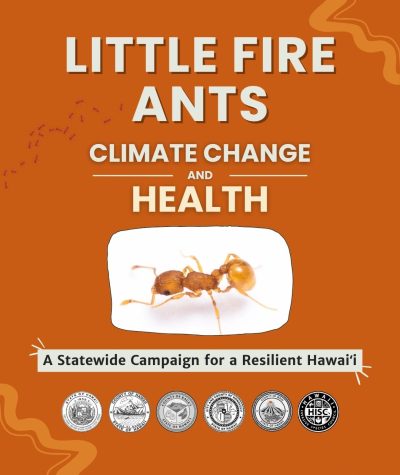
Little Fire Ants, Climate Change, and Health
Learn how little fire ants impact climate change and what that means for invasive species control and public health.
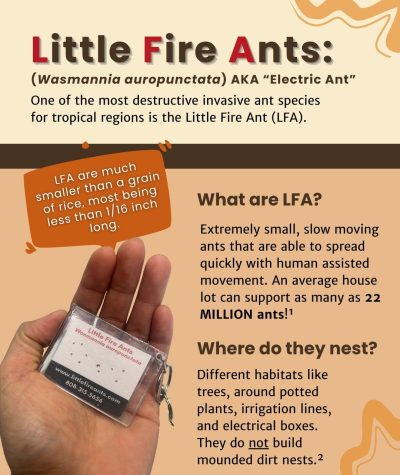
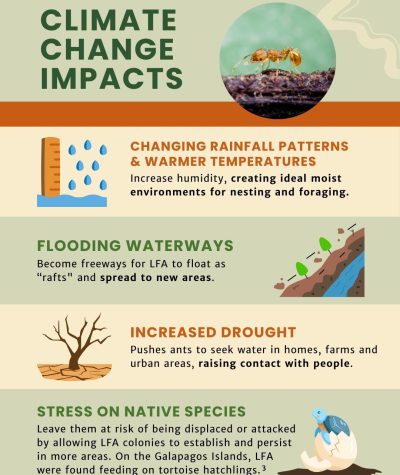
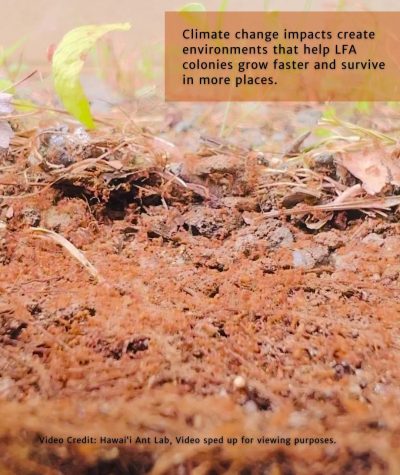
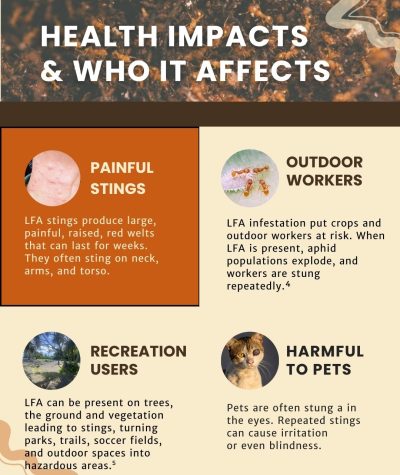
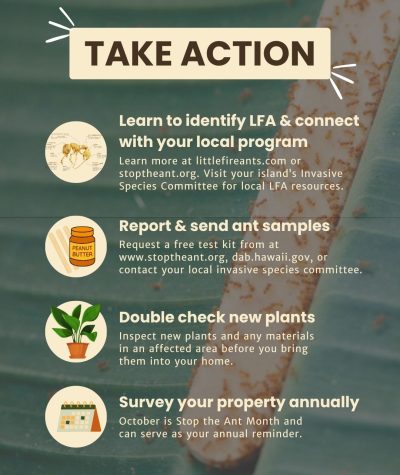
Did you know, there are no native ants in Hawaii? Ants were first introduced in the 18th century when the Europeans settled the islands. Little Fire Ant (wasmannia auropunctata) arrived on the island of Hawaii most probably in the 1990’s and by the time the infestation was detected in 1999, LFA had spread to 13 separate locations.(1) Due to the severity and extent of impacts, LFA is considered one of the most destructive invasive ant species. In homes, schools, trails, and parks, LFA will sting adults, infants, children and pets. Impacts from climate change such as warming temperatures, shifting rainfall patterns, and increased flooding, create envronments that help LFA colonies grow faster and survive in more places. (2) Early detection and community action can make a big impact. You can request a free ant collection kit to check new plants or vegetation and to survey your property. (3)
Learn more about LFA and other invasive species by following along on the Climate Change, Invasive Species, and Public Health social media campaign with any of the tagged collaborators through the remainder of the summer! #StoptheAnt #ClimateAndCrittersHI #InvasiveImpactHI
References:
1) Hawai‘i Invasive Species Council. Ecological and Economic Impacts of Little Fire Ants in Hawai‘i. Department of Land and Natural Resources, 2015. https://dlnr.hawaii.gov/hisc/files/2019/02/2015_EcologicalEconomics_LFA_Impacts_Hawaii.pdf
2) “Impacts of Little Fire Ants.” Hawaiʻi Ant Lab, https://littlefireants.com/impacts/. Accessed 20 Nov. 2025
3) “Request an Ant Collection Kit.” Stop the Ant, https://stoptheant.org/request-ant-collection-kit/. Accessed 20 Nov. 2025
Click here to check out this Instagram post!
Invasive Grasses, Climate Change, and Health
Learn how invasive grasses impact climate change and what that means for invasive species control and public health.
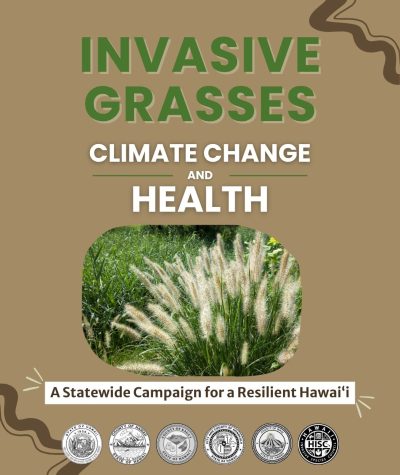
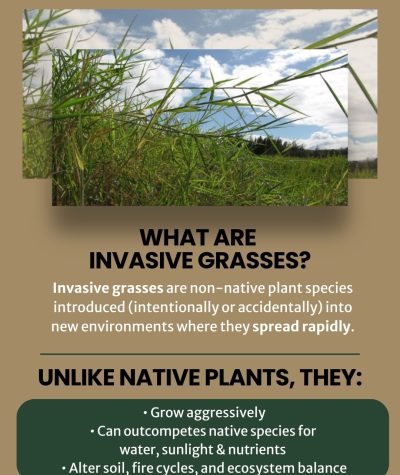
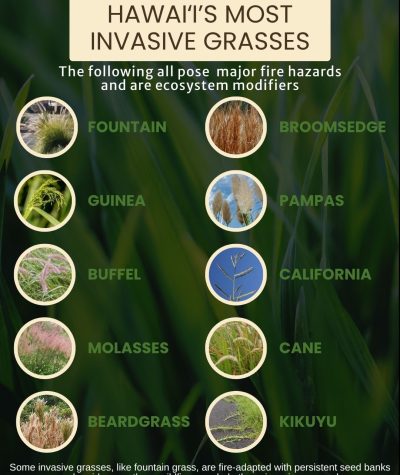
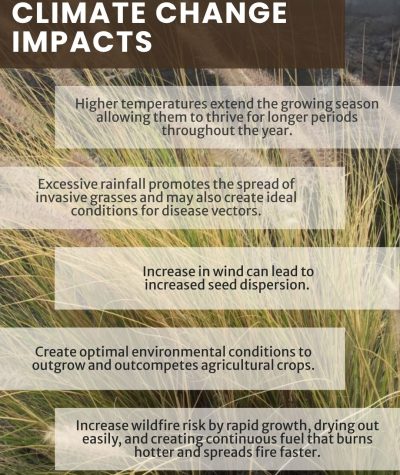
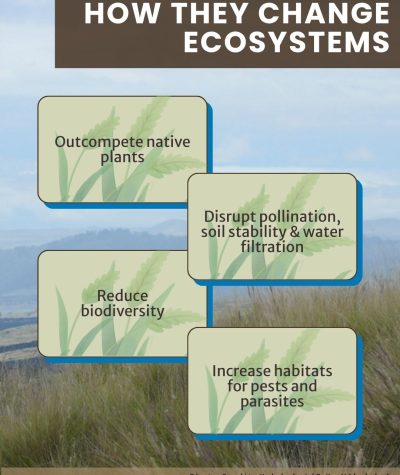
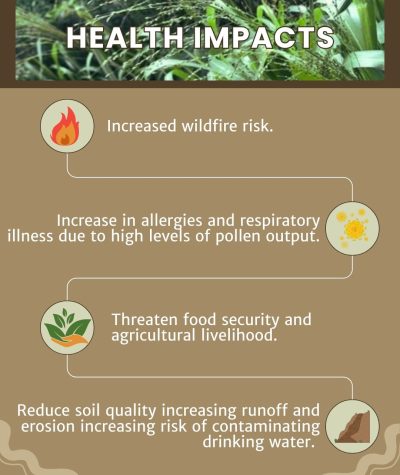
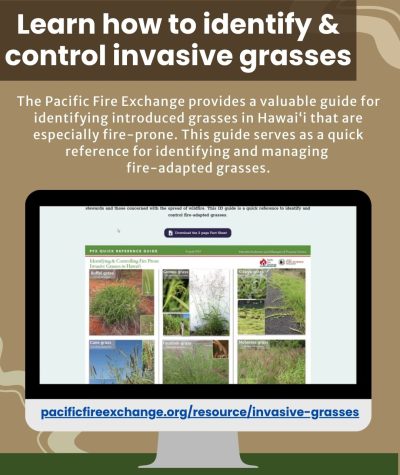
Invasive grasses are reshaping Hawaiʻi’s landscapes, and climate change is accelerating the threat. 🌾🔥
Warmer temperatures, shifting rainfall, and stronger winds allow fire-prone species like fountain grass to spread rapidly. These grasses dry out easily, fuel more intense wildfires, and recover quickly after fire, often outcompeting native plants in the process.
The result? Increased wildfire risk, biodiversity loss, and impacts to air quality and water resources.
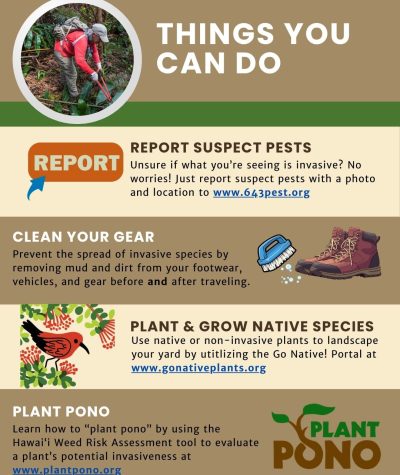
Learn to identify fire-prone invasive grasses, report sightings, clean gear to prevent seed spread, and choose to plant native species to help reduce wildfire risk and restore balance.
Click here to check out this Instagram Post!
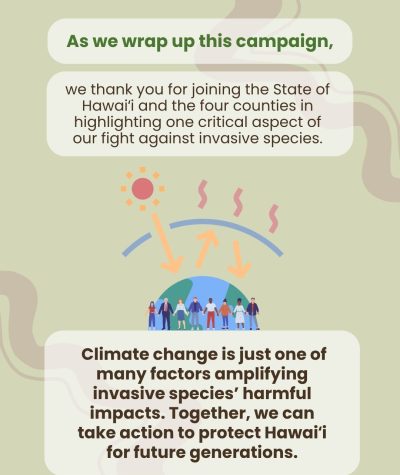
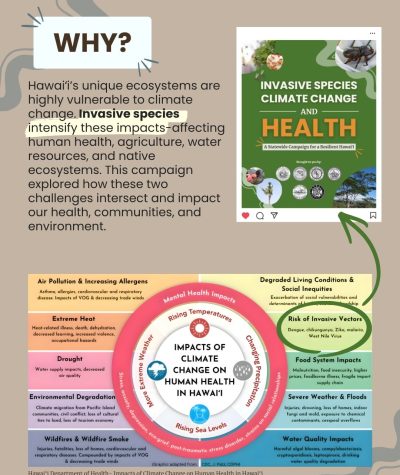
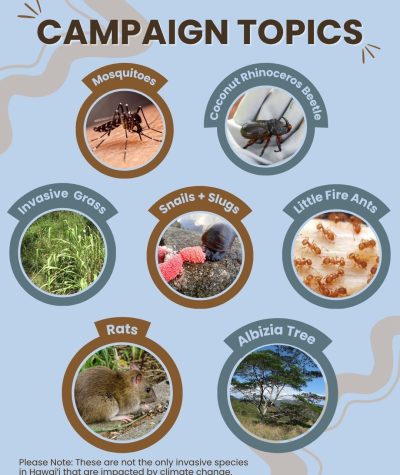
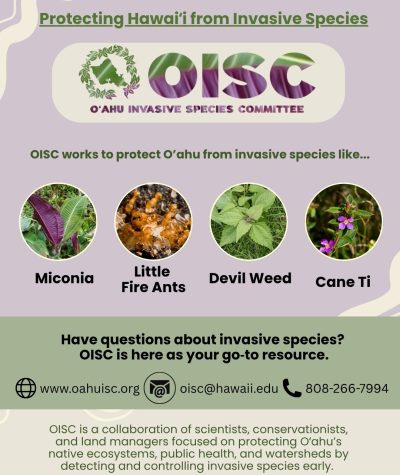
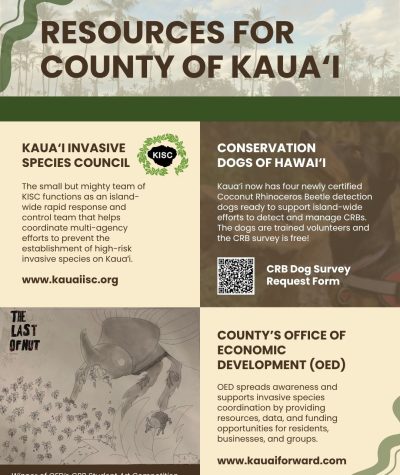
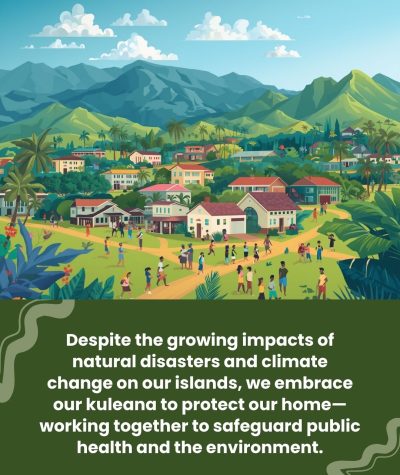
Mahalo for joinging us throughout this campaign as we highlighted how climate change an invasive species amplify each other’s impacts on our islands. Hawaiʻi’s unique ecosystems, communities, and resources are especially vulnerable—and invasive species only intensify these challenges.
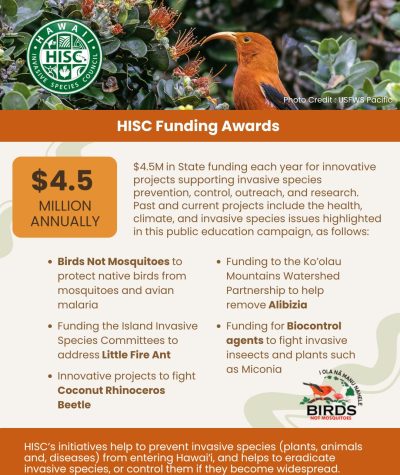
Together with our partners across the State of Hawaiʻi’ and the four counties, we explored how these issues shape our health, environment, and future. Despite the growing pressures of climate change and natural disasters, we continue to embrace our kuleana to protect our home and safeguard Hawaiʻi’ for future generations. Together, we can protect Hawaiʻi’—today and for the years to come.