Hawaiʻi is fortunate that some of the most harmful diseases are not endemic here, meaning they are not being spread locally. Let’s work together to keep it that way. Although you may feel fine while traveling, if you contract a disease or virus overseas and return home to Hawaiʻi, you risk spreading it to others you come in contact with. Follow the tips below to help you travel well and stay healthy!
The state of Hawaiʻi no longer requires COVID-19 vaccination for entry. For more information on respiratory viruses, please visit https://health.hawaii.gov/docd/disease-types/respiratory-viruses/
Travel Tips
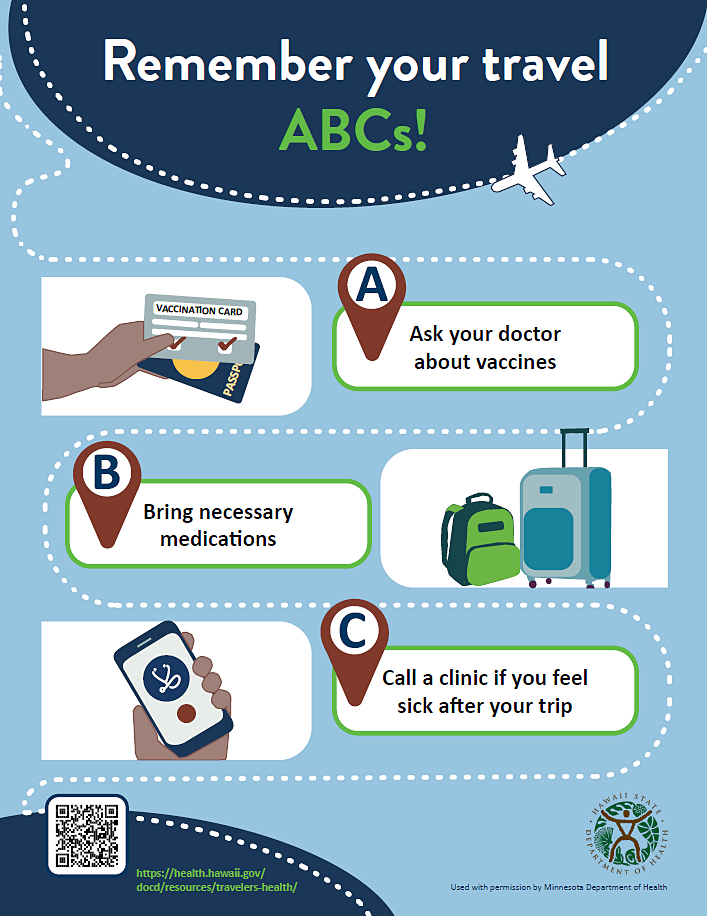
Stay up to date on all routine vaccines. All travelers should be up to date on routine and recommended vaccinations before traveling to stay protected against infectious diseases that can spread quickly in groups of unvaccinated people.
Before traveling with children, it is essential to ensure they are up to date on all routine vaccines. Consult with your physician for more advice about recommended pre-travel vaccinations, including any additional vaccines that may be recommended for international destinations.
Check your destination. You can enter the country name in the CDC Traveler’s Health Destination website for an overview of health recommendations specific to your destination, including vaccinations, health precautions, and any current travel health notices of actively circulating diseases.
Prepare a travel health kit with items you may need, including items that may not be available to purchase at your destination. Include your prescriptions and over-the-counter medicines in your travel health kit and take enough to last your entire trip, plus extra in case of travel delays. Depending on your destination you may also want to pack a mask, insect repellent, sunscreen (SPF15 or higher), aloe, alcohol-based hand sanitizer, water disinfection tablets, and your health insurance card.
Stay home when sick. If you have a fever or feel unwell during travel, stay home and avoid travel.
Practice good hygiene. Regular handwashing is one of the best ways to avoid getting sick and prevent the spread of germs to others. Wash your hands with soap and water; if not, use hand sanitizer containing at least 60% alcohol. Use masks in crowded spaces for additional protection.
Avoid bug bites. Bugs such as, mosquitoes, ticks, fleas, and flies, can spread diseases, including malaria, yellow fever, Zika, dengue, chikungunya, and Lyme. Use insect repellent (containing one of the following substances: DEET, picaridin, citriodiol, IR3535) to exposed skin if diseases spread by insects are common in your destination. Wearing long shirts and pants can also help to avoid bug bites.
Choose safe food and drinks. Contaminated food and beverages can cause travelers’ diarrhea and disrupt your travel. Generally, foods served hot or in packages are safe to consume, and bottled, canned, and hot drinks are usually safe to drink. If there is water contamination at your destination, drink bottled water, and remember that ice made from tap water can also be a source of infection.
Be safe around animals. Avoid animals, including pets, local farm animals, and wild animals. In addition to the risk of rabies, all animal bites carry a risk of bacterial infection.
Get travel insurance. Have a plan to get care overseas in case you need it. Find out if your health insurance covers medical care abroad. Travelers are usually responsible for paying hospital and other medical expenses out of pocket at most destinations.
Visiting Hawaiʻi
Protect yourself from the sun. Avoid prolonged sun exposure if possible. Apply sunscreen with SPF30 or higher to avoid sunburn and reapply at least every two hours, as well as after exercise or time in the water.
Avoid swimming or wading in freshwater streams or ponds. Swimming in fresh water, especially with any open wounds, can increase the risk of contracting the bacterial disease Leptospirosis.
Be cautious during water activities. Please observe all posted signs and warnings when visiting the coast. Hawaiʻi beaches may experience strong surf conditions, jellyfish, brown water advisories, and other safety warnings. For current beach conditions, go to Hawaiʻi Safe Beach Day. Do NOT swim if you have an open wound or have diarrhea.
Choose safe food and drinks. To prevent illnesses transmitted through food and water, consume thoroughly cooked food and wash fruits and vegetables if they are not peeled. Avoid the consumption of raw or undercooked snails or slugs, and ensure all produce being consumed is washed thoroughly. Consumption of snails, slugs or produce contaminated by them can increase your risk of contracting Angiostrongyliasis (Rat Lung Worm) disease.
After Travel
If you traveled recently and feel sick, consult a healthcare provider and tell them about your recent travel history.
Travel Immunization Resources
Additional Resources
Healthy Travel
English | ʻŌlelo Hawaiʻi (Hawaiian) | Ilokano (Ilocano) | 日本語 (Japanese) | Español (Spanish) | Tagalog
Leptospirosis
English | ʻŌlelo Hawaiʻi (Hawaiian) | Ilokano (Ilocano) | 日本語 (Japanese) | Español (Spanish) | Tagalog
Wound Care
English | ʻŌlelo Hawaiʻi (Hawaiian) | Ilokano (Ilocano) | 日本語 (Japanese) | Español (Spanish) | Tagalog
Last reviewed July 2026