Watershed-Based Plans
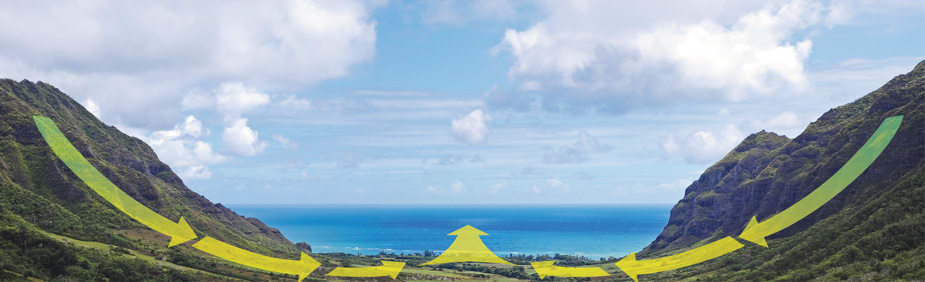
Watershed Planning & Nonpoint Source Pollution
A Watershed-Based Plan is a work plan for achieving water resource protection and nonpoint source pollution reduction goals in a specific watershed. In addition to serving as a valuable resource for land stewards, it is a requirement for projects to receive Clean Water Act Section 319 Grant Program, which is administered by the Surface Water Protection Branch (SWPB).
The Hawaiian Islands have 558 watersheds, but only 22 watershed-based plans have been approved. If you have a project idea that requires funding, check if your watershed has an approved watershed-based plan using the list or map below. Approved plans can also be accessed on the Surface Water Protection System Viewer.
Developing a Plan
The watershed planning process involves characterizing existing conditions, identifying and prioritizing problems, defining management objectives, and developing and implementing protection or remediation strategies. It is an extensive process and is best executed in partnership with multiple community stakeholders.
Resources for developing watershed-based plans include Hawaiʻi Watershed Guidance and the EPA’s Resources for Watershed Planning. The SWPB provides technical assistance to community-based organizations creating their own plans. The SWPB and United States Environmental Protection Agency must approve a watershed-based plan in order for a given watershed to receive funding.
Map of Section 319-Eligible Watersheds
Apply for Section 319 grant funding!
Watershed-Based Plans
Below is a list of watersheds with approved watershed-based plans. Watersheds with a TMDL are noted; the full TMDL reports are available on the Clean Water Branch’s Integrated Report and TMDL webpage.
Hawaiʻi
- Pelekane Bay (Kawaihae watershed)
- Waikoloa-Waiʻulaʻula Stream
Maui
- Kahoma and Kauaula Watersheds
- Southwest Maui (includes Hapapa, Wailea, Moʻoloa)
- West Maui (includes Honokōwai, Wahikuli, Kahana, Honokahua and Honolua)
- Wahikuli-Honokowai Watershed Management Plan Vol. 1 Watershed Characterization (2012)
- Wahikuli-Honokowai Watershed Management Plan Vol. 2 Strategies and Implementation (2012)
- Kahana, Honokahua and Honolua Watersheds Characterization Report (2016)
- Kahana, Honokahua and Honolua Watersheds Strategies and Implementation Report (2016)
- South Central Maui
Kaua’i
- Hanalei Bay (includes Hanalei, Waikoko, Waipa, and Waioli)
- Nawiliwili Bay (includes Puali, Huleʻia, and Nawiliwili)
O’ahu
- Ala Wai (includes Mānoa-Palolo, Makiki, and Ala Wai)
- Management and Implementation Plan (1998)
- Volume I
- Volume II (Appendices A-C, Appendices D-J)
- Ala Wai Canal TMDL (2002)
- Management and Implementation Plan (1998)
- Honoʻuliʻuli
- Kaiaka Bay (includes Kiʻikiʻi and Paukauila)
- Kapakahi Stream
- Koʻolaupoko (includes watersheds from Kualoa to Makapuʻu)
- Maʻiliʻili
- Waikele
- Wailupe Stream
Kaho’olawe
- Kaulana and Hakioawa
- Kamōhio
Additional Resources
Below are additional resources that may be referenced in the development and implementation of watershed-based plans.